Instructional Design Examples: Capabilities and Example Projects
Talent development teams within many organizations find challenges in outsourcing instructional design. To create learning solutions in response to business needs, using dedicated instructional design services from a trusted partner can be useful, and PPS is a preferred supplier for many multinational organizations. Because "instructional design" can mean anything from a job aid to a year-long learning journey, this page shows what it produces in practice: nine instructional design examples from our work, the deliverables that come out of a project, the process behind them, what we design for and how to brief a partner when you outsource.
What instructional design produces
Instructional design is the practice of turning a desired performance outcome into a learning experience that changes what people do on the job. The materials are the visible output, but the product is behavior change as a result of application: a supervisor who holds the difficult conversation, a sales representative who asks the discovery question, a leader who coaches instead of directs. The examples below follow that storyline: the situation first, then the design, the deliverables and what made it work.
Nine instructional design examples from our work
1. A blended, multi-workshop program for new leaders in a global organization
The need was consistent leadership behavior across regions that had grown up with different management cultures. The design was a series of facilitated workshops with self-paced pre-work, application assignments between workshops and briefings for the managers of participants, with materials translated into 11 languages. Deliverables included facilitator guides, participant workbooks, translation-ready slides and manager support guidelines. What made it work was holding the core behaviors constant while the examples and cases adjusted by region.
2. A coaching toolkit for a global energy services company
The company wanted leaders to develop the organization's leadership competencies in their teams through coaching rather than through a course. The design was a toolkit leaders could use in their one-on-one meetings: conversation guides for each competency, observation checklists, practice cases and a short facilitated introduction. What made it work was that the toolkit fit the meetings leaders already held, so coaching became part of the operating rhythm rather than an added event.
3. Demonstration videos with job aids for nursing supervisors
Nursing supervisors needed to hold difficult conversations and coach staff, and they had almost no time away from the unit. The design was a series of short demonstration videos showing each conversation done well, paired with one-page job aids the supervisors used in huddles and before conversations. What made it work was the live demonstration format; seeing a real person do what is being taught builds more buy-in than reading about it.
4. Microlearning for about 2,500 manufacturing employees
A manufacturer needed shift employees to use data analysis tools, with learning approved by bargaining units and work councils and no new system to log into. The design was eight modules of about 15 minutes each, delivered through the technology employees already used, with specific behaviors for application and examples built with client subject matter experts. Use of the data tools rose by 31% in the population trained this way. The full story is in our digital microlearning case study.
5. A generative AI playground for 5,000 global life sciences employees
Employees lacked clarity on how to apply generative AI tools to real work, and digital capability varied across the workforce. Using an agile design process and success profiling, our instructional designers identified the foundational knowledge and skills for a baseline of capability, built activities in which participants applied the tools to their own workstreams during the program and embedded application activities into the 21 days afterward. See Building Innovation Readiness: GenAI Playground.
6. Coaching skills for leaders in a global medical device company
Newly published core values needed behavioral translation, managers varied widely in their use of coaching and the audience was global and change-fatigued. The design translated the values into observable skills, established a shared language and skill set before moving to each participant's own scenarios, simplified coaching into everyday behaviors and built in examples that adjusted by delivery location. The coaching skills for leaders case study has the detail, and our article on instructional design constraints explains the design responses.
7. A hybrid program for a distributor's remote sales representatives
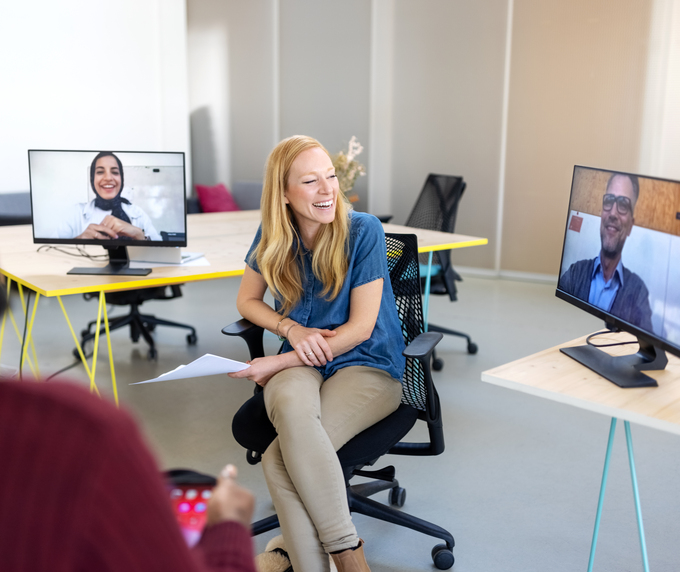
A large distributor of metalworking products and factory maintenance supplies had sales representatives who worked remotely and traveled to client sites, and they preferred to attend training without disrupting client visits. The design created alternative activities that let remote participants collaborate in virtual breakout rooms and present to the full cohort, with an in-room producer so the facilitator could attend to both audiences. Post-program measures of skill use and participant reactions were strong in both groups. Our guide to designing training for hybrid participant groups draws on this work.
8. A graduate rotational program with structured networking
An international energy services organization asked PPS International Limited to design a graduate rotational program that exposed new hires to all aspects of the business while building skills in communication, self-management, collaboration and working across cultures. Networking activities with specific outcomes were designed into every facilitated module, with networking assignments completed between modules. The structure gave outgoing participants manageable avenues for building relationships and gave less outgoing participants permission and a format to reach out. Our article on encouraging networking during training describes the activities.
9. Learning-from-experience checklists and curated micro-learning for new managers
Organizations that promote only a few managers a year cannot run a cohort program at a regular cadence, and waiting leaves new managers without tools. For this need we create new manager assignments and checklists with links to existing resources, supported by curated micro-learning, as a practical stop-gap or a complement to facilitated programs. Our new manager development case study shows both the cohort program and the low-volume option.
What the nine examples have in common
The formats differ, and the design decisions behind them are the same. Each project defined the outcome as behaviors tied to business KPIs before choosing a format. Each provided practice with feedback for the difficult skills, whether in a workshop, a video demonstration or a 15-minute module. Each fit the learning into an operating rhythm that already existed, such as one-on-ones, huddles, shifts or client visits, rather than adding an event. Each gave managers or sponsors a role, and each was measured against the behaviors it set out to change. Those five decisions are what make an instructional design example worth copying, more than the format itself.
Common deliverables
Most projects produce a combination of the following. The table groups the deliverables by how they are used.
| Category | Deliverables | Used For |
|---|---|---|
| Facilitated learning | Facilitation guides, slides, participant workbooks, skills cards and practices, case studies, simulations | Workshops and cohort programs, in person or virtual, delivered by PPS facilitators or by internal trainers |
| Self-paced and digital | Video and e-learning modules, learning packages for independent work, AI-supported learning tools, assets curated for an LMS or other platforms | Scalability and reach across dispersed audiences; asynchronous learning, self-directed learning |
| Performance support and job aids | Learning-from-experience guides, development guides, observation checklists, manager support guidelines, simulations and cases | Applying skills on the job, coaching and development conversations, self-assessment by the learner |
| Reinforcement and social learning | Drip campaigns and micro-learning reinforcers, social learning guidelines, moderation guidelines | The weeks after a program, to increase the probability of successful transfer of learning |
| Implementation and measurement | Administration guidelines, curation of learning assets into learning paths, measurement and evaluation framework | Running the program at scale and documenting behavior change and its impact on KPIs |
Our instructional design process
PPS instructional designers employ either a modified ADDIE or an agile process for the design and development of assets used in our programs. In practice a project moves through the following phases, and the client sees something at each one:
- Discovery and needs assessment: interviews and data from the audience and sponsors, so that the solution solves the business problem that exists rather than the one assumed; our training needs assessment article describes the methods.
- Success profile and objectives (impact, performance and learning): identification of the behaviors the participant will demonstrate, which become the basis for design, practice and measurement.
- Learning strategy and design: a blueprint of the solution, the flow, methods, practices and application points, tested against the organization's constraints before anything is built.
- Development in collaboration with subject matter experts, who review at fixed points, in prototypes that sponsors can react to.
- Implementation support: facilitator preparation or train-the-trainer, manager briefings and administration guidelines.
- Pilot and revision with a representative target audience.
- Measurement of application and results against the objectives set in the second phase; see our guide to measuring training success.
Our methodologies for engagement include actions and activities that build skills and transfer learning to the workplace: involving experiences, brief "teach" segments, live demonstrations and application practices with immediate feedback.
What we design for
- Content that is relevant in today's global business environment.
- High levels of engagement and interaction among participants.
- Experiential learning and application rather than information transfer.
- Guidelines for managers and sponsors so implementation succeeds.
- The organization's performance and impact needs, measured in behavior and results.
Working with outsourced instructional designers
PPS manages a contractor talent pool of instructional designers across North America to support custom design work for our clients. These contractors are onboarded and developed through a formal onboarding program to ensure they understand and honor the principles of adult learning, adhere to project management standards, remain diligent in their continuing education, consider brand and style guidelines and deliver high-quality design work meeting the standards of both PPS and our clients.
The projects that go best are the ones where the sponsor arrives with a clear brief. Here is what we suggest bringing to the first conversation with any design partner:
- The business problem you are solving for.
- The outcome, as behaviors you need to see on the job, and how you would know.
- The audience: who they are, where they are, their languages and how different their starting points are.
- The constraints: time per participant, budget, systems, approvals and what else is changing for the audience.
- Subject matter experts and reviewers, with the time they can give.
- Existing assets, brand and style guidelines and the platforms the program has to live on.
- Existing content and any content gaps for the subject matter.
- The timeline, including when a pilot could run and who owns the weeks after delivery.
- An approved budget for contracting instructional design services.
A good partner asks about all of these before proposing a format, and pushes back when the requested format does not fit the outcome.
Frequently asked questions
What are examples of instructional design in corporate training?
Multi-workshop leadership programs with application between sessions, coaching toolkits used in one-on-ones, demonstration videos with job aids, microlearning series delivered through existing platforms, hands-on technology adoption programs, hybrid workshops for remote sales teams, structured networking inside rotational programs and learning-from-experience checklists for low-volume roles. The nine examples above describe each.
What are the types of instructional materials?
Seven types cover most corporate programs: facilitator guides, participant materials such as workbooks and skills cards, visual media such as slides and videos, performance support tools such as job aids and checklists, self-paced digital modules, assessments and practice cases, and reinforcement materials such as drip campaigns and manager prompts.
What does an instructional design project include?
Discovery, impact, behavioral and learning objectives, a design blueprint, development with expert review, implementation support, a pilot, and evaluation and measurement. The deliverables depend on the format, from a single job aid to a full learning path, and the table above groups the common ones.
How long does an instructional design project take?
It depends on scope, approvals and expert availability. As rough ranges: a job aid or a short video series takes a few weeks; a one- or two-day facilitated workshop with pre-work and follow-up typically takes two to three months from discovery to pilot; a multi-workshop program with translation, manager materials and reinforcement runs four to six months or more. Approval cycles and translation requirements add time that is worth planning for at the start.
How do you know whether an instructional design worked?
By the behavioral change and results defined in the objectives, not by completion or satisfaction alone. The examples above were measured in ways that fit the outcome: use of data tools, skill use after a hybrid program, adoption of AI tools in daily work and coaching conversations held. Measurement tools are part of the design deliverables so that the evidence exists when sponsors ask for it.
What is the difference between instructional design and training development?
Instructional design decides what the learning experience should be, based on the audience, the outcome and the constraints. Training development produces the materials that design calls for. In small projects one person does both; in larger ones a designer leads and developers, writers and media producers build to the design.
Where to start
If you are considering outsourcing a design project, the brief above is the place to begin, and the examples show what to expect at the end. Learn more about our instructional design services, see how design responds to real-world constraints or contact us to talk through a project.