


Talent Management
Streamline the Learning Options in Your 70-20-10 Model for Learning
Many organizations subscribe to a 70-20-10 model for learning where 70 percent of learning comes from on-the-job or experiential learning, 20 percent from social learning and learning from others and 10 percent from formal, structured learning. This learning design principle shifts the focus away from over-reliance on formal training and toward embedded, on-the-job development. This approach builds learning transfer, ensures applicability and allows for participant choice. At the same time, it can be overwhelming to manage the amount of information and available options, especially when talent development organizations typically operate with limited resources.
The Benefits of Participant Choice
The 70-20-10 model for learning offers participants choices. Having a variety of options for development works well because it ensures that participants have choices in both what they learn and the way in which they learn it. This participant-centered approach supports different learning styles and just-in-time learning. It also honors what we know about skills that are critical to achieving role success—some skills are more difficult to learn, more linked to reaching goals and more difficult to recall than other skills. Having participant choice allows for individuals to reinforce their learning through a variety of methods.
Avoiding Overwhelm in Managing Your 70-20-10 Model for Learning
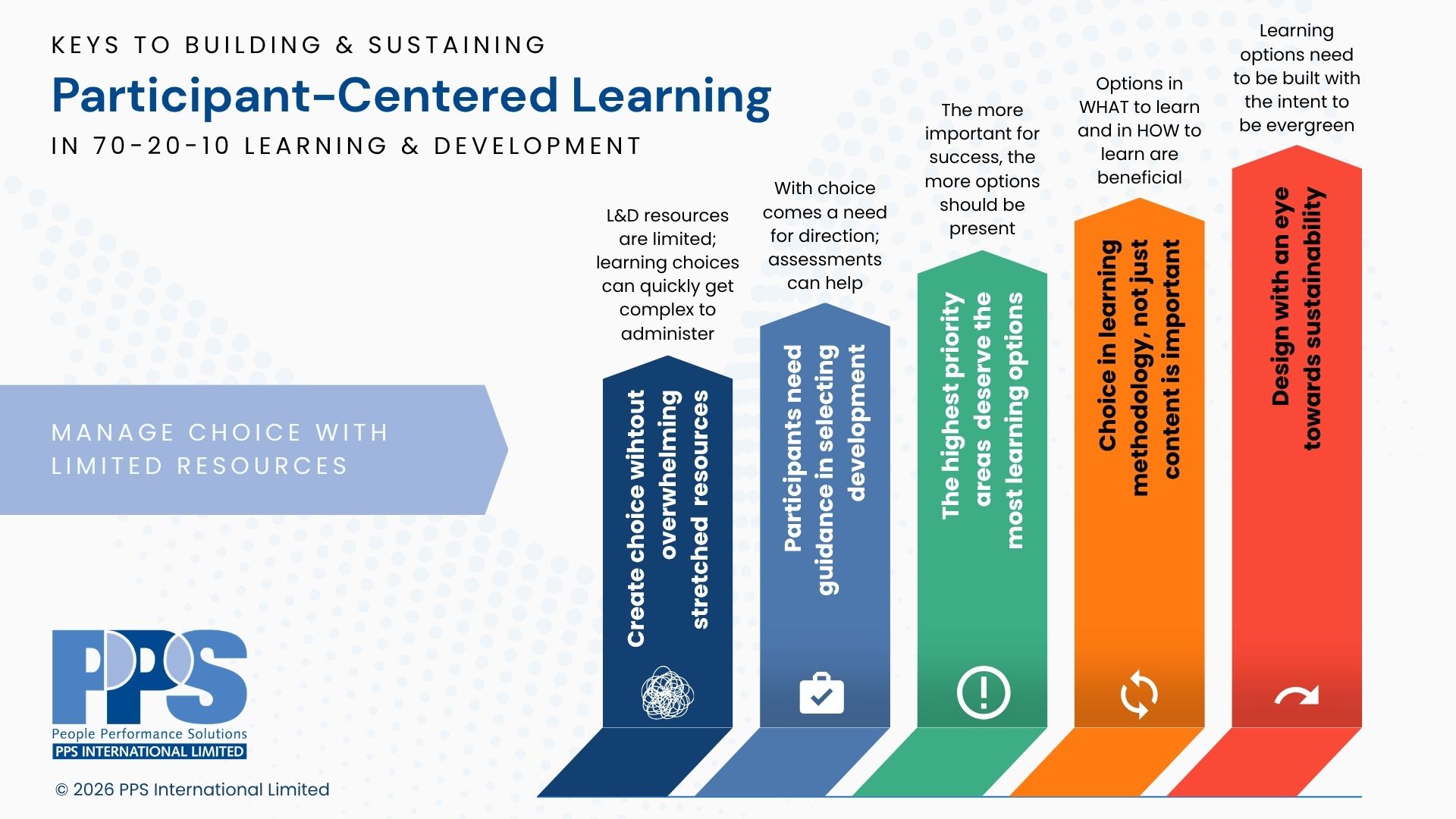
If you or your organization are building participant-centered learning using a 70-20-10 model for learning, a campus-style learning or structuring development paths, consider these keys to success:
- More choice can mean more complexity for those administering and managing development. Keep complexity low where possible.
- Participants faced with choices will still need guidance on what to select and how to sequence their learning. Prepare the learner to use the systems you've set up.
- Not all skills require multiple options for learning. Give priority to those skills that are closely linked to outcomes. These high priority areas benefit from a variety of options for learning.
- Learning choice can be in both WHAT is learned and HOW it is learned. In sorting through options, consider putting the most variety into the methods and leaning into broader content areas.
- Just as having choice can add to complexity in administering and supporting implementation, it also can add to the burden of keeping learning evergreen. Design and build with ease of updating in mind.
PPS International Limited can support your organization in creating participant-centered learning as part of your 70-20-10 model for learning. We'd welcome a conversation of ways we can help your efforts.
Recent Posts
Filter






We’re ready for you.
We enjoy discussing possibilities and approaches, so please reach out! Contact PPS International Limited today to explore how we can support your talent development initiatives.

PPS International Limited is a trusted learning and development partner empowering teams of all sizes with leadership, communication, influence, sales and professional skills training that drives meaningful business results.
© 2026 PPS International Limited. All Rights Reserved